Many seeds native to the Hudson Valley require a period of cold, moist winter-like
conditions to break dormancy and successfully germinate. Unlike annual vegetable
seeds, that are typically sown in the spring, native seeds should be sown outdoors in
late fall/early winter to naturally over-winter and start the process of cold stratification.
Sowing seeds in a closed ‘jug’ container increases germination rates by protecting the
seeds from being eaten or washed away and keeping the moisture levels stable.
“Not all native seeds require this cold period for germination, but every seed can be
sown outdoors in the fall or winter.” -Wild Seed Project
Supplies:
- Native seeds
- Milk jugs or plastic containers that allow light to pass through (salad clamshells,
transparent cat litter containers etc). *Container requirements: Should be sturdy
enough to withstand the elements, deep enough to hold at least 4 inches of soil,
allow room for both root and shoot growth, have drainage holes in the bottom
and the top should be clear/translucent with ventilation holes. - Utility knife/scissors
- Wax/china pencil
- Organic potting soil, we like to use Promix (no fertilizer, no garden soil that will
have weed seeds) - Duct tape
- Standing plant labels (optional)
Directions:
- Collect and reuse clean translucent 1 gallon jugs or plastic containers. Remove
the cap. - Use a utility knife to slice 4-6 drainage holes on the bottom of the jug.
- Cut the jug in half below the handle, leaving one long side attached as a hinge.
This retains the structural integrity of the jug and requires less tape. Leave at
least 4” of space on the bottom for soil. - Label the top of the jug with the plant name and sowing date using a wax/china
pencil (sharpies will fade over time from exposure to rain and sun). Add a
standing label for the inside too. - Add 3-4” of pre-moistened organic potting soil. Soil should be moist enough that
it holds a form in your hand and isn’t crumbly, but not dripping wet. Lightly press
the soil down to remove any air pockets from the bottom of the jug. - Scatter seeds on top of the soil. Cover lightly with play sand or soil. Very small
dust-like seeds require light to germinate and should be surface sown (left
uncovered).
A good rule of thumb: Seeds should be sown only as deep as they are wide. - Duct tape the jug back together, making sure to close up any gaps. You now
have a mini-greenhouse! - Set the jugs outdoors in a protected area in partial shade where rain and snow
can enter the top. Monitor the moisture through the hole in the top. Make sure to
keep the soil moist and mist with water if it looks dry inside. - Open the jugs in the spring after days are consistently above 50°F and the
danger of frost has passed. Move to a partially sunny location. Transplant the
seedlings into pots or your garden when they reach 2” or taller in height and have
several sets of leaves. - Jugs can be washed and reused again next year.
Happy planting!
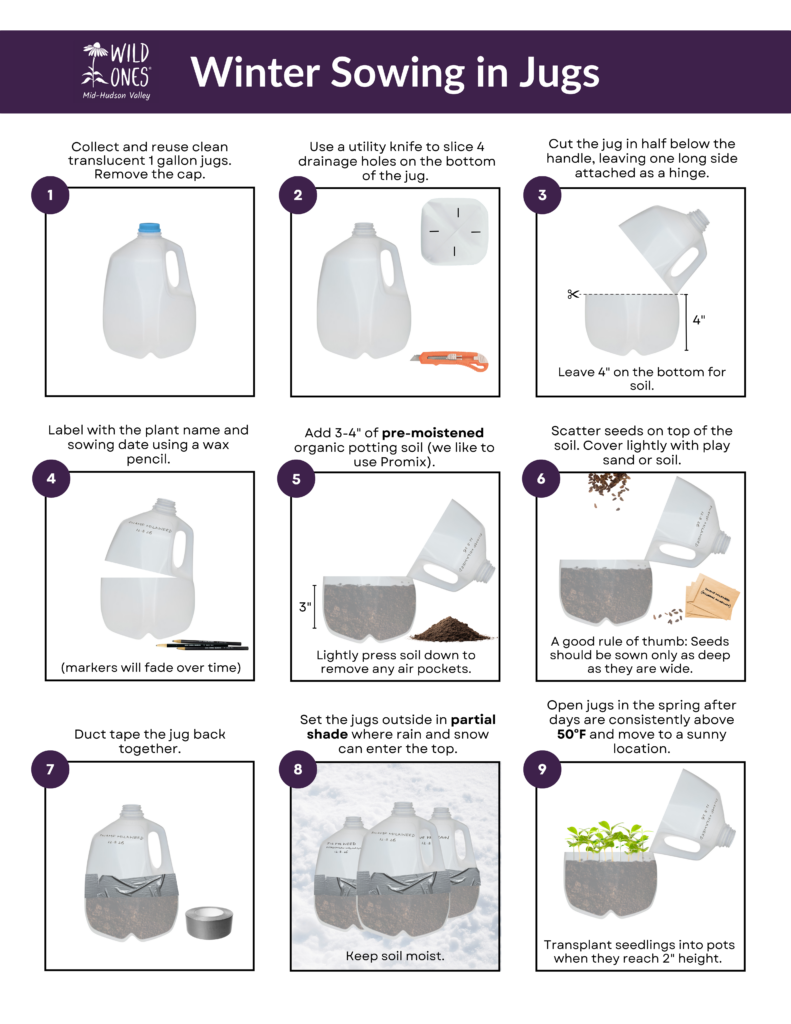
Click here for a printable version of the illustration
For more information and techniques check out
https://wildseedproject.net/blog/how-to-grow-natives-from-seed
https://wildseedproject.net/blog/ideal-time-for-sowing-native-seeds
For plant germination codes
https://www.prairiemoon.com/how-to-germinate-native-seeds.html
updated 4/11/26