
Coping With Deer In Winter:
Using Repellants To Protect Your Woody Plants
by Angela Sisson
This article was first published in February, 2022 for Wallkill Valley Pollinator Pathway.
Trees, shrubs and vines (woody plants) are valuable plants in our ecological landscape and especially important to pollinators. Hardwood trees and shrubs are the top pollinator host plants, referred to by author Doug Tallamy as keystone species.
Woody plants are the most vulnerable to deer predation in the late winter and early spring. During fall a deer’s diet switches from soft green plants to harder woody plants, favoring the nutritious, tasty bud tips. The loss of these growing tips can kill or seriously compromise woody plants and many don’t recover the same way perennials do. Aggravating this dietary preference is the fact that by late winter deer have depleted their fat reserves. By March, especially after a tough winter, deer are most at risk of starvation.
If you have trees and shrubs which are accessible to deer, now is the most important time to protect them. It’s a matter of protecting your investment—just as new plantings need be watered, many established plants need protection. The gold standard for protection is deer fencing but where fencing won’t work, other methods can be used.
Of the various methods I’ve tried over the years (caging, deer netting, wireless electric fence, etc.) spray repellents have worked the best. Surrounding a tree with cage made of fencing tends to be unattractive and a maintenance obstruction. Hungry deer can often crush the fence. Deer netting is also unattractive and it can catch birds and snakes—and, of course, hungry deer can crush the netting.
Spray repellents work best on smaller landscapes where plants are within a few hundred feet of each over. For example, I spray up to 50 trees and shrubs every few weeks through the winter, all of which takes me about 15-20 minutes. Spraying in winter gives me the opportunity to visit my plants, especially those plants which are out of sight and out of mind. Winter is also a time to see the bones of your landscape, a time when you might get ideas about what to plant or remove. Think of spraying repellents as a form of winter gardening. Make sure to spray on warmer days, above freezing, or the liquid will crystallize and not adhere to plants. I like to wait until the temperatures are near 40° F.
As spring emerges, the non-woody (herbaceous) cool season, ground-hugging plants begin to green up and the deer’s diet transitions from the hard woody plants to these softer green plants. At this point the pressure on the trees and shrubs will let up.
Using repellents gives me the confidence of knowing that I can plant what I want. Though the deer are the first to remind me if I forget to spray.
Update June 2026
This past winter has been the coldest in recent memory. We had extended periods when it did not get above freezing which restricted my ability to spray repellent. And, of course, the harsh winter increased the hunger stress on the deer. As a result, some of my woody plantings took a hit. Though surprisingly, not many.
What to Use
I’ve been using Liquid Fence for over twenty years and find it’s still effective. However, if you find the smell objectionable there are several alternative repellents on the market which are also apparently effective. It makes sense to experiment and find something that you’re comfortable with.
Deer Rub
In recent years, I’ve lost more woody plants to deer rub than deer browse. I now use cages to protect woody stems and trunks. Rub protection cages are strong but smaller in diameter than browse protection cages because they just need to cover the trunk area. They can be removed in summer for weeding maintenance and replaced in late summer or fall. Cages can be made from 2×4 welded wire fence at least 4ft high. Any shorter and a buck can crush it to the ground – as I’ve learned the hard way.
A Tale of Two Trees
In 2021 I planted a Smoketree and Pagoda Dogwood. That fall a deer rubbed the Smoketree in several areas but completely girdled the Pagoda Dogwood. (The cages in the photos were placed after the damage was done.)
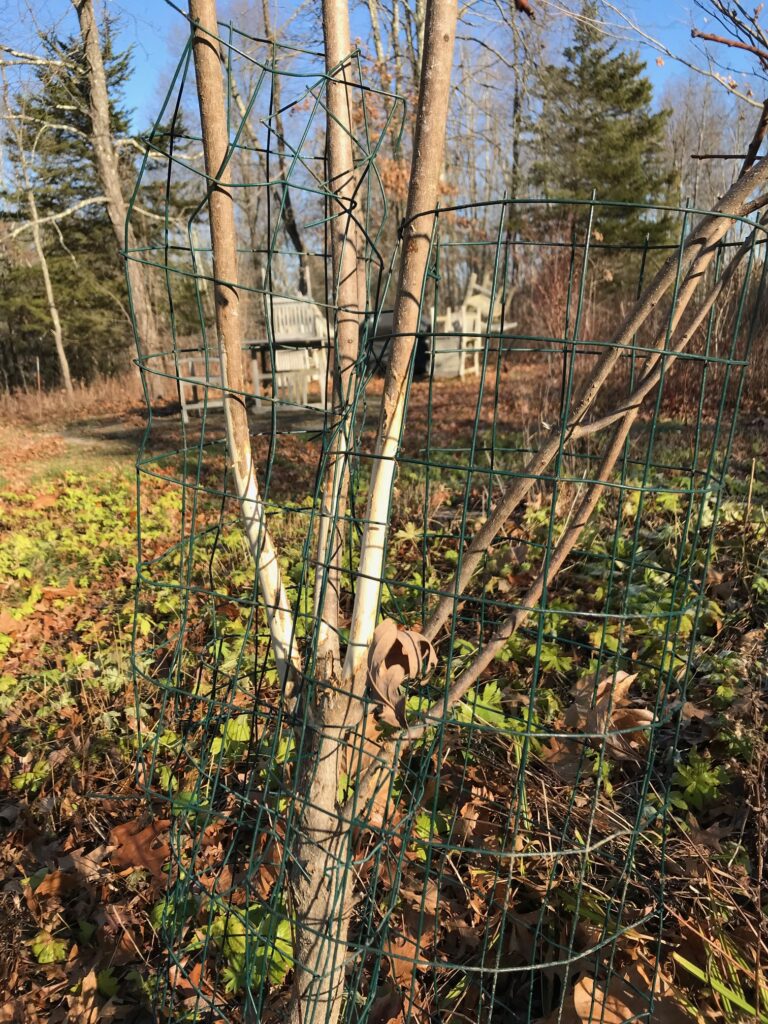
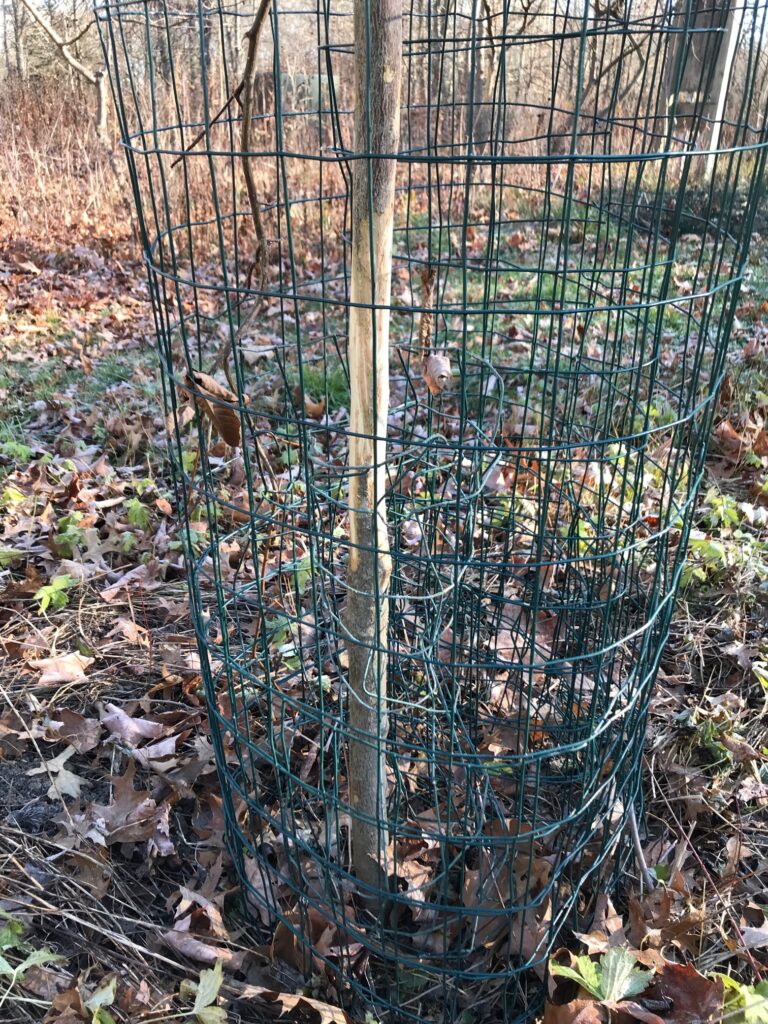
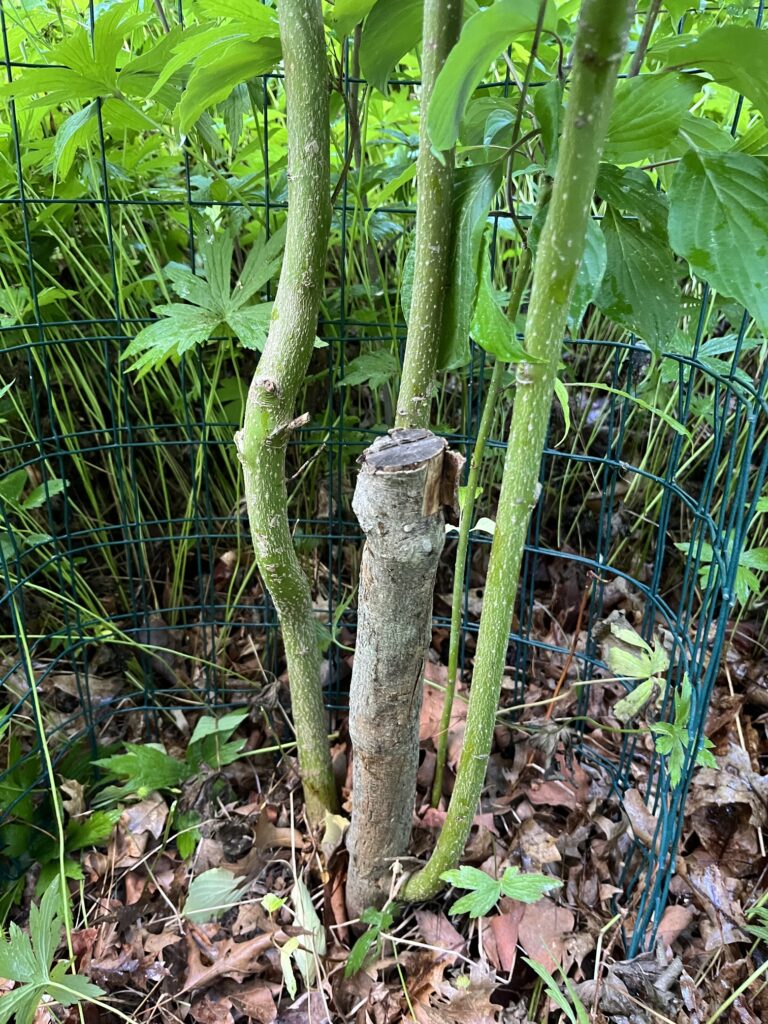
The Smoketree quickly recovered and the Dogwood eventually recovered after the (girdled) main stem was cut and the suckers replaced it.
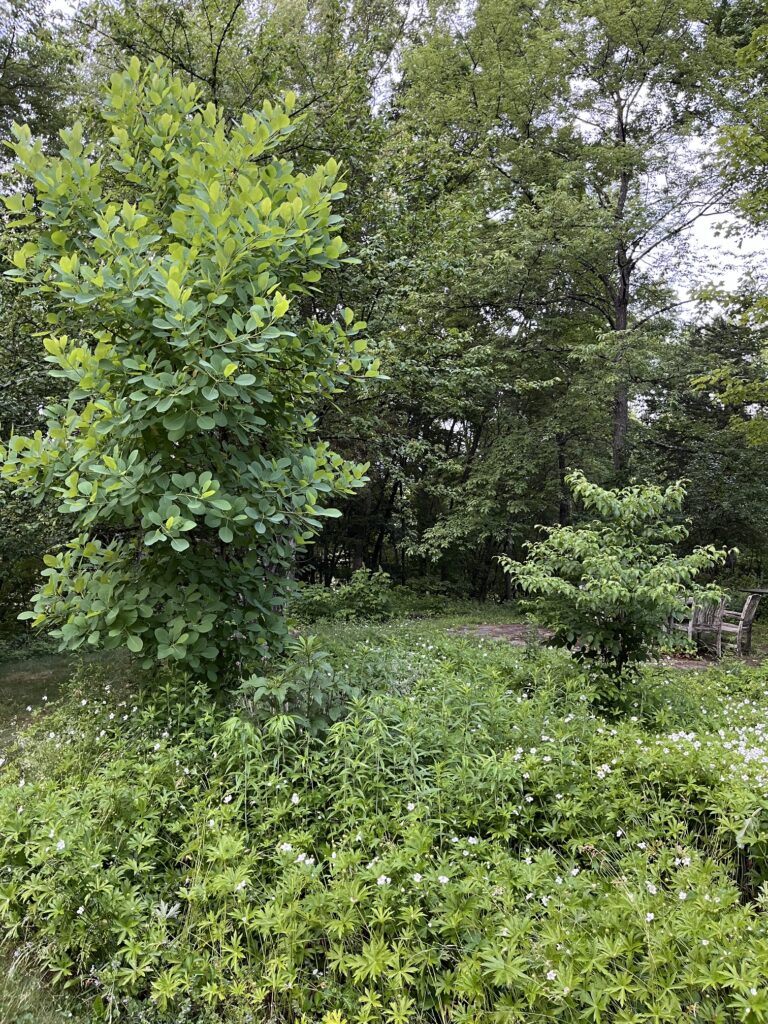
When the trees were first planted they were both three to four feet tall. The Smoketree is now about fifteen feet tall while the Dogwood is about seven feet tall.

Angela Sisson
Angela received her gardening start four decades ago with the creation of a wildflower garden for wildlife. She holds a master’s degree in ecological landscape design from the Conway School and has worked in the field of ecological planning and design for the past twenty years. Angela lives in the southern Ulster County with her husband on a rewilded landscape.